
Richmond Hill Basement Mold Remediation | Cartier Cres Mold Removal Project
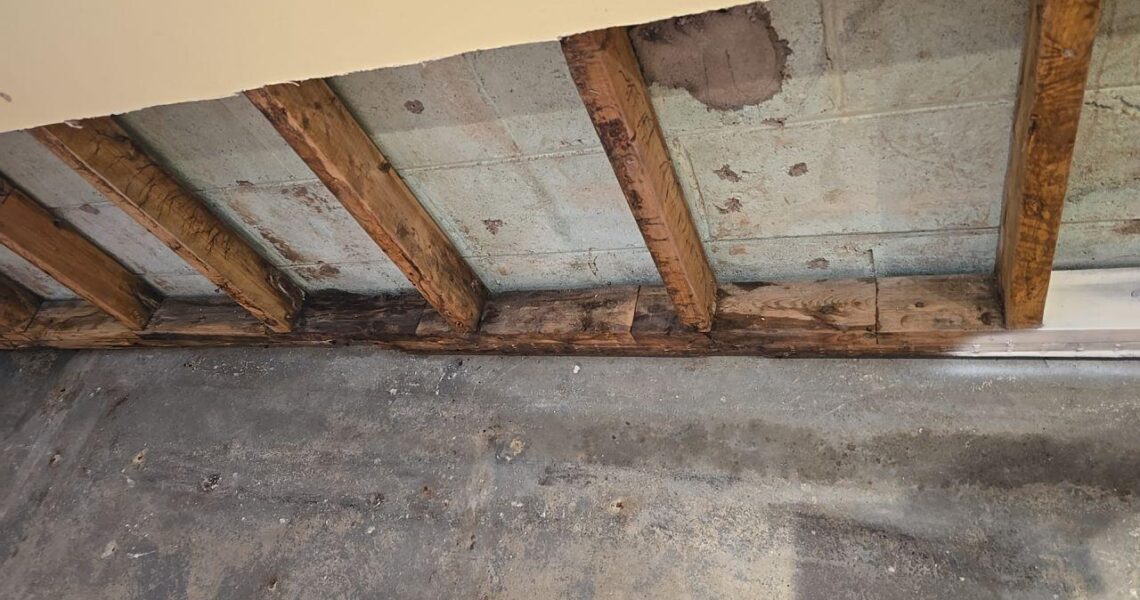
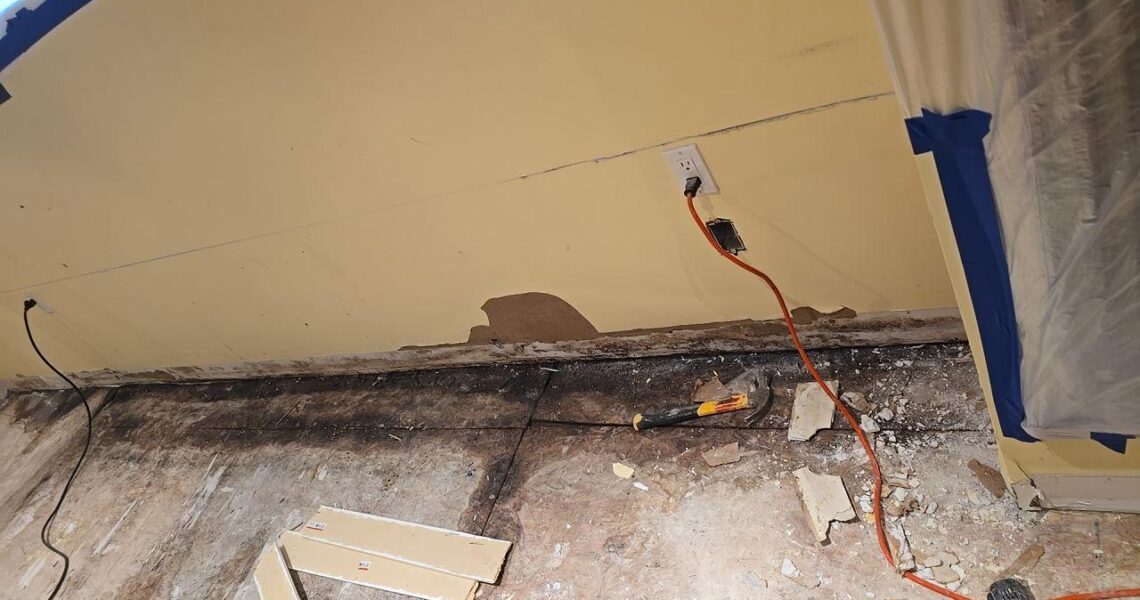
Mold Assist recently completed a basement mold remediation project in Richmond Hill on Cartier Cres after hidden mold contamination was discovered beneath laminate flooring during a basement renovation inside a tenant-occupied property. The homeowner initially began renovation work in the lower-level rental unit when sections of flooring were removed, revealing dark microbial staining and moisture damage along the subfloor and perimeter wall areas.
Because the property remained occupied during the project, the homeowner contacted Mold Assist immediately to safely investigate the contamination and help protect indoor air quality throughout the home. During the inspection, our technicians confirmed that moisture had likely remained trapped beneath the laminate flooring system for an extended period of time. Laminate flooring combined with underlayment and vapor barriers can often trap moisture between the concrete slab and flooring layers, creating ideal conditions for hidden mold growth to develop unnoticed.
Hidden Mold Discovered Beneath Basement Flooring on Cartier Cres
Once sections of laminate flooring were removed, visible mold staining and moisture damage became apparent along the perimeter of the basement floor and lower wall assemblies. Additional investigation revealed contamination affecting multiple building materials hidden beneath the finished flooring system.
The inspection identified:
- Hidden mold growth beneath laminate flooring
- Moisture trapped below vapor barrier materials
- Microbial staining along the subfloor perimeter
- Water damage affecting lower drywall sections
- Elevated moisture conditions near perimeter walls
- Contaminated baseboards and trim materials
Projects like this demonstrate how mold contamination inside Richmond Hill basements can remain concealed for long periods before becoming visible during renovation or demolition work.
Containment Setup to Protect the Occupied Basement Unit
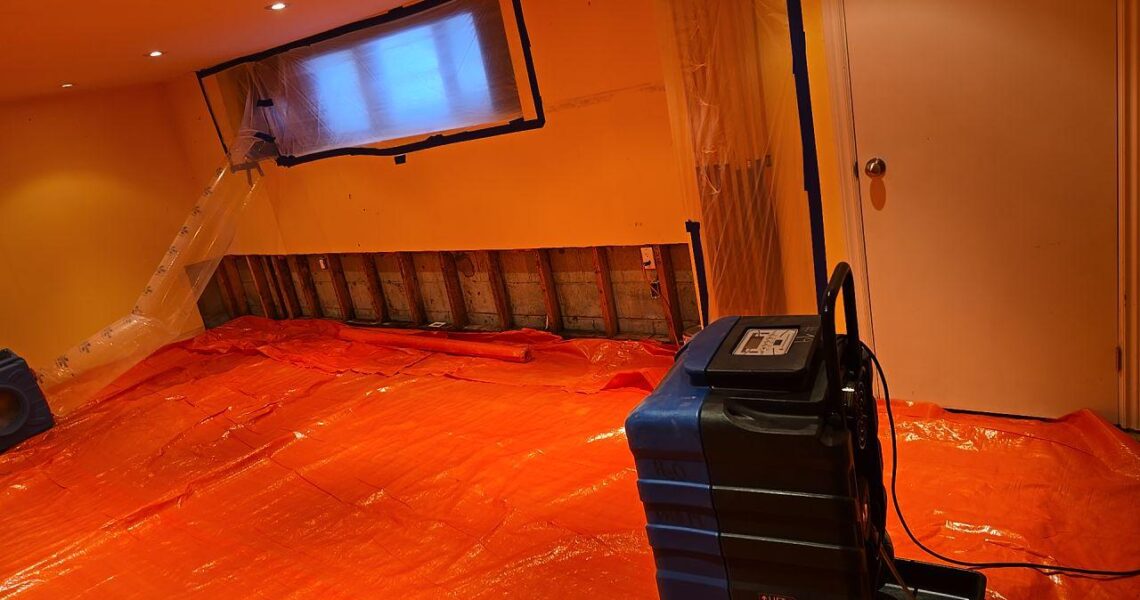
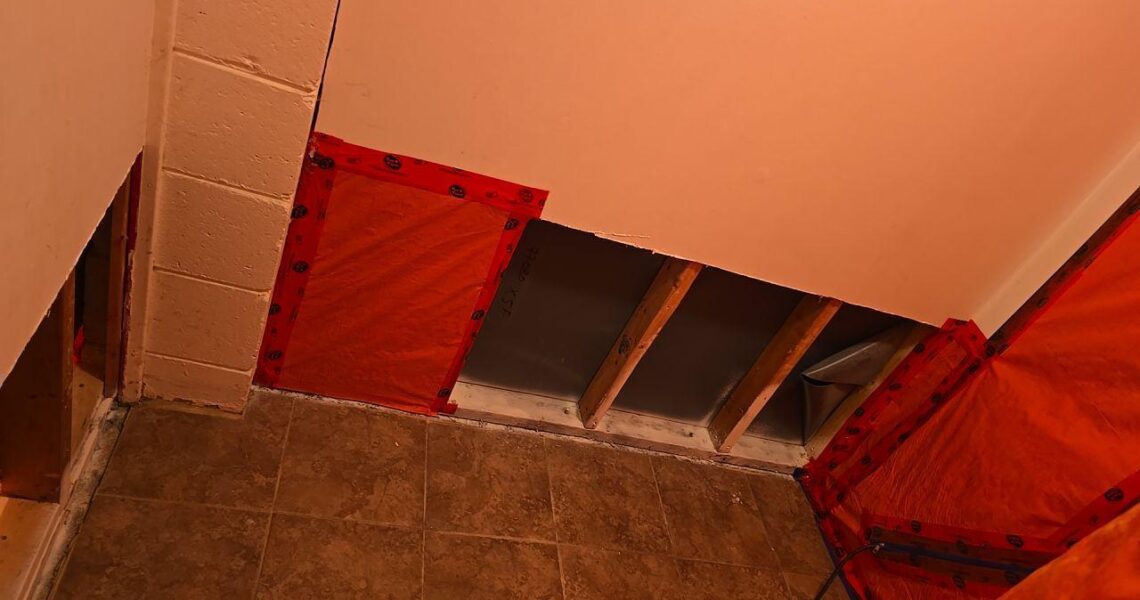
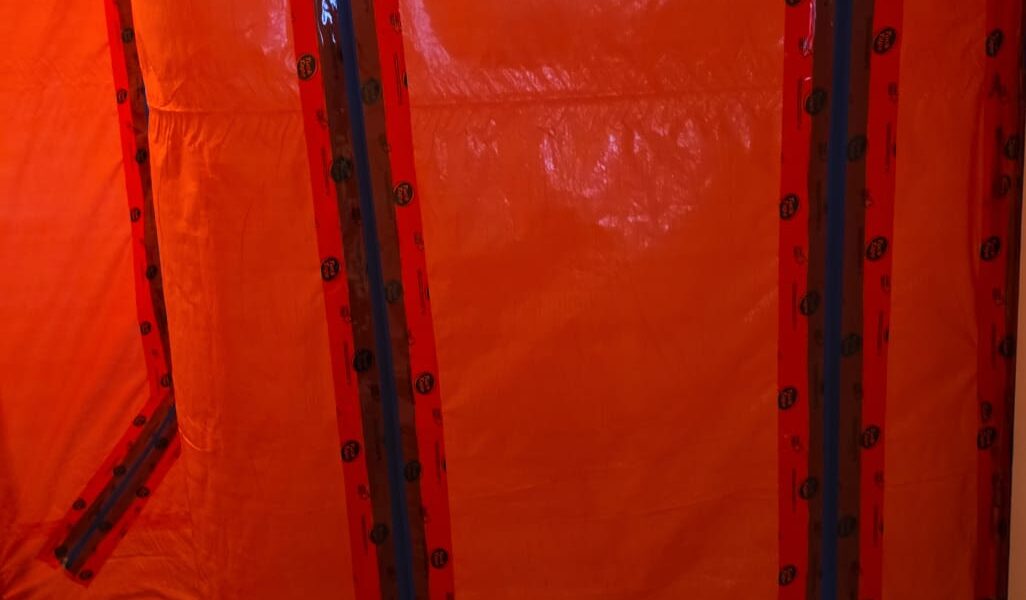
Because the basement remained occupied during remediation, Mold Assist first installed professional containment barriers to isolate the affected work area from the remainder of the home. Our technicians used heavy-duty polyethylene containment systems to create a sealed remediation chamber where demolition and cleaning activities could safely take place.
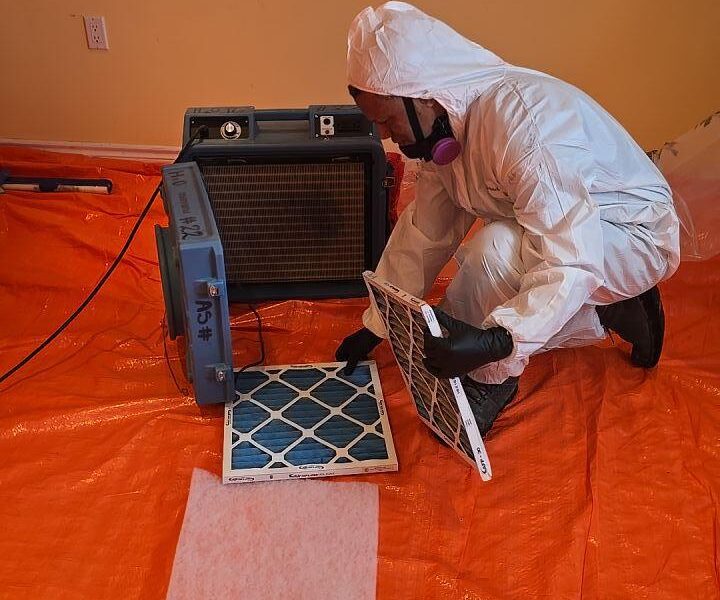
In addition, HEPA-filtered negative air equipment operated continuously throughout the project to capture airborne particles and help protect indoor air quality during the remediation process.
- Containment barriers around affected basement areas
- Negative air filtration equipment with HEPA filtration
- Protection of nearby occupied living spaces
- Controlled airflow during demolition and cleaning
- Dust and spore containment throughout remediation
Removal of Contaminated Basement Materials
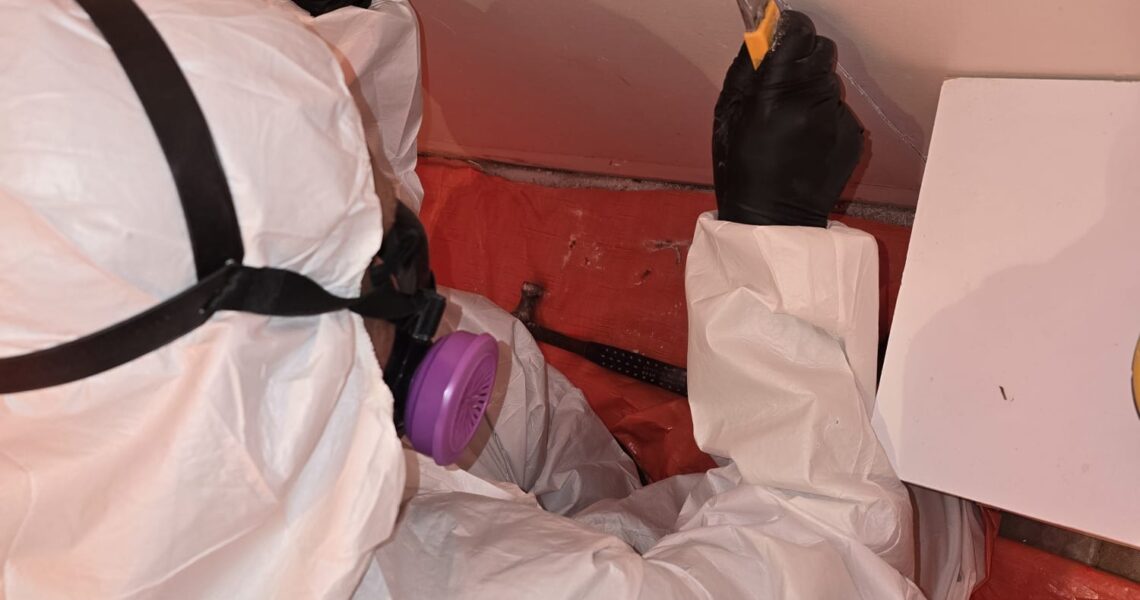
After containment was established, Mold Assist began controlled demolition and removal of contaminated building materials throughout the affected basement areas. Our technicians carefully removed moisture-damaged materials while maintaining containment procedures designed to minimize airborne contamination.
The remediation process included removal of:
- Laminate flooring planks
- Foam underlayment and vapor barrier materials
- Contaminated baseboards and trim
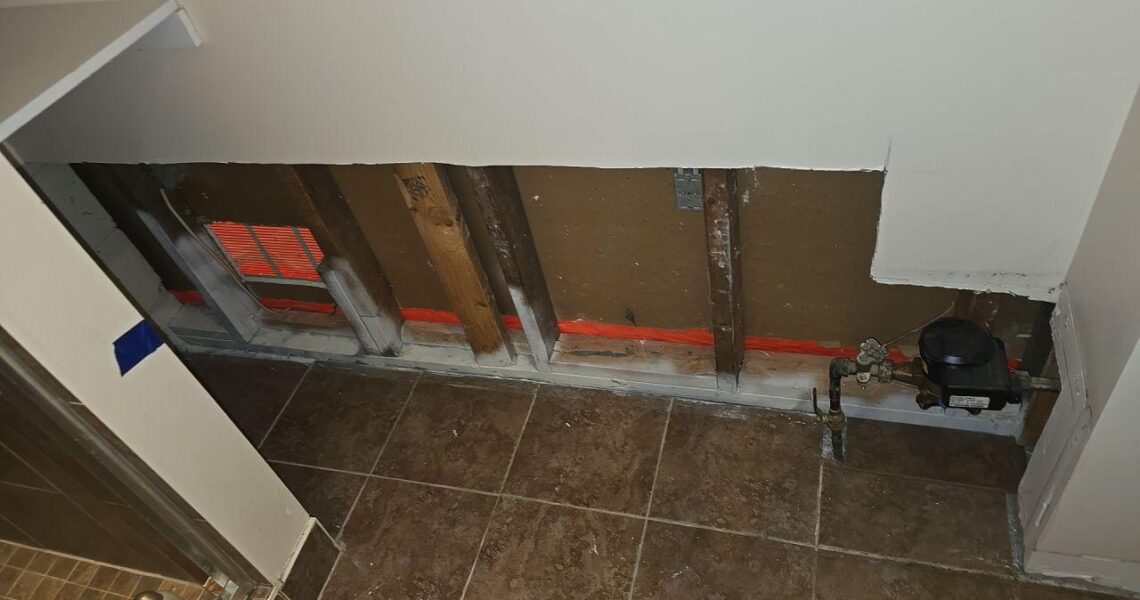
- Lower drywall sections affected by moisture damage
- Compromised subfloor materials with microbial growth
Once demolition was completed, additional hidden contamination became visible beneath the flooring assembly and along the lower wall system where moisture had accumulated over time.
HEPA Cleaning, Antimicrobial Treatment & Structural Drying
Following demolition, Mold Assist completed detailed HEPA vacuuming and structural cleaning of all exposed basement surfaces. Next, our technicians mechanically cleaned the affected structural areas before applying professional antimicrobial treatment to impacted materials.
The remediation process included:
- HEPA vacuuming of exposed structural surfaces
- Mechanical cleaning of affected framing and subfloor areas
- Professional antimicrobial treatment application
- Air filtration and humidity control equipment
- Structural drying and moisture stabilization
Commercial drying equipment remained in place throughout the project to reduce humidity levels and support moisture stabilization before reconstruction could continue safely.
Why Mold Is Commonly Found During Basement Renovations
Many homeowners discover hidden mold contamination only after beginning renovation or demolition work. In basement environments, moisture problems can remain concealed beneath flooring systems, behind drywall, or around perimeter walls for years without obvious visible signs.
Common areas where hidden mold is often discovered include:
- Beneath laminate and engineered flooring systems
- Behind finished basement drywall
- Along perimeter basement walls
- Near plumbing fixtures and utility penetrations
- Inside poorly ventilated storage areas
Once renovation work exposes these concealed materials, previously hidden mold contamination often becomes visible.
Protecting Indoor Air Quality During Basement Mold Remediation
Professional containment and HEPA air filtration play an important role during mold remediation projects inside occupied homes. Without proper containment procedures, airborne mold spores can spread throughout the property during demolition and cleaning activities.
For this reason, Mold Assist follows industry-recognized remediation procedures commonly referenced by organizations such as the IICRC S520 Mold Remediation Standard and Health Canada.
Successful Mold Remediation Outcome for the Richmond Hill Property
Once remediation and drying were completed, the basement area was clean, stabilized, and ready for renovation work to continue safely. More importantly, the remediation process helped address the hidden moisture conditions that allowed mold growth to develop beneath the flooring system.
This Richmond Hill basement mold remediation project on Cartier Cres highlights the importance of stopping renovation work immediately when mold contamination is discovered and contacting a professional mold remediation company before construction continues.
Professional Basement Mold Remediation Services in Richmond Hill
Mold Assist provides professional basement mold remediation services in Richmond Hill for homeowners, landlords, contractors, and property managers dealing with hidden mold growth, water damage, elevated humidity, and moisture intrusion.
Our services include:
- Mold inspections and moisture investigations
- Basement mold remediation
- Containment setup for occupied properties
- HEPA cleaning and antimicrobial treatment
- Structural drying and humidity reduction
- Hidden mold investigations during renovations
You can also learn more about our mold inspection services and basement mold removal services.
Need Basement Mold Removal in Richmond Hill?
If mold is discovered during renovation or demolition work, it is important to stop construction activities and address the contamination safely before rebuilding begins.
Mold Assist provides professional basement mold remediation in Richmond Hill to help safely remove hidden mold contamination and restore healthy indoor environments.
Learn more about our mold removal services in Richmond Hill or contact Mold Assist today to schedule a professional mold inspection.
Frequently Asked Questions About Basement Mold Remediation in Richmond Hill
How do you know if mold is hidden under basement flooring?
Hidden mold beneath flooring is often discovered during renovation or demolition work. Moisture trapped below laminate flooring, underlayment, or vapor barriers can create ideal conditions for mold growth without visible surface damage.
Is basement mold remediation safe in occupied homes?
Yes. Professional remediation companies use containment barriers and HEPA air filtration systems to help prevent mold spores from spreading throughout occupied homes during remediation work.
Should renovation work stop if mold is discovered?
Yes. Renovation work should stop immediately so the contamination can be properly contained and remediated before reconstruction continues.