
The Hidden Risk of Renovating Basements in Toronto & the GTA Without Proper Mold Remediation
Basement renovations are one of the most common home improvement projects across Toronto and the Greater Toronto Area (GTA). Whether homeowners are finishing a basement for added living space, building a rental unit, or repairing damage after water intrusion, demolition is often the first visible step.
However, one of the most dangerous and costly misconceptions in basement renovations is the belief that demolition equals mold removal.
It does not.
During a recent site inspection by Mold Assist, our certified team assessed a basement that had undergone near-complete interior demolition. Drywall and insulation had been removed, framing was exposed, and new lumber installation had already begun.
Despite this, clear signs of mold contamination, microbial staining, and moisture impact were still present on the concrete foundation, surrounding assemblies, and ceiling cavities.
Even more concerning, new wood framing was now being installed inside a previously contaminated environment.
This article explains why demolition alone does not solve mold problems, how mold survives and spreads during renovations, and what homeowners and contractors across Toronto and the GTA must do to protect both health and investment.
Mold in Toronto & GTA Basements: A Widespread Issue
Basements in Toronto and surrounding cities such as Mississauga, Brampton, Vaughan, Markham, Richmond Hill, Oakville, Burlington, Ajax, Whitby, and Pickering are especially prone to mold growth due to:
-
High groundwater tables
-
Aging foundation systems
-
Seasonal freeze–thaw cycles
-
Heavy rainfall and snowmelt
-
Poor exterior drainage
-
Foundation cracks and window well leaks
Many homes across the GTA were built decades ago, often without modern waterproofing systems or proper vapor barriers. As a result, moisture intrusion — even when subtle — can persist for years behind finished basement walls.
When moisture is present, mold follows.
Why Homeowners Assume Demolition Solves Mold
From a homeowner’s perspective, demolition feels like progress:
-
Moldy drywall is removed
-
Insulation is stripped out
-
Framing becomes visible
-
The basement looks “cleaner”
Unfortunately, mold does not work that way.
Mold is not just a surface problem. It is a biological contaminant that spreads through microscopic spores and root-like structures (hyphae) that penetrate porous materials and bond to surfaces such as concrete, wood, and dust.
Demolition removes damaged materials — but it does not neutralize mold contamination.
What Actually Happens During Demolition Without Mold Remediation
When demolition occurs without containment, negative air pressure, and HEPA filtration, several things happen simultaneously:
1. Mold Spores Become Airborne
Removing drywall, insulation, and ceiling materials disturbs settled mold spores. These spores become airborne and spread throughout the basement and beyond.
2. Spores Travel Through the Home
Airborne spores migrate into:
-
Adjacent rooms
-
Ceiling cavities
-
HVAC ductwork
-
Electrical chases
-
Stairwells and upper floors
This means mold contamination can expand, not shrink, during demolition.
3. Mold Remains on Structural Surfaces
Concrete foundation walls, sill plates, rim joists, and framing often retain:
-
Visible staining
-
Microbial residue
-
Embedded spores
These surfaces must be professionally cleaned and treated — simply exposing them does nothing.
Why Concrete Is Often the Biggest Mold Reservoir
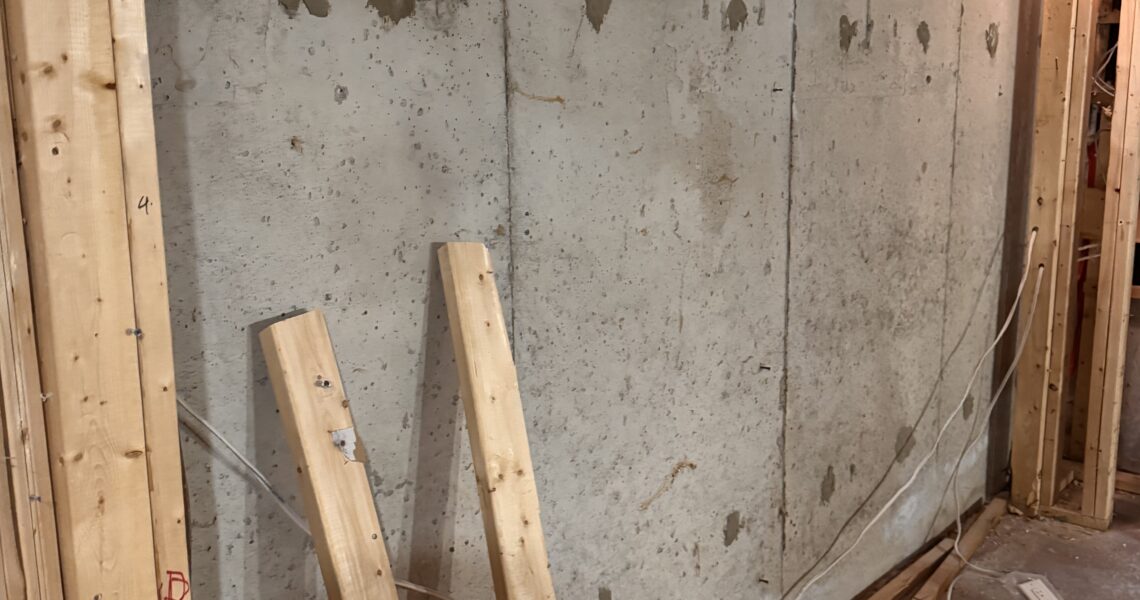
A common misconception is that mold cannot grow on concrete.
While concrete does not “feed” mold, it holds moisture and organic debris, allowing mold spores to survive and persist on its surface. In Toronto and GTA basements, concrete walls often show:
-
Efflorescence
-
Water staining
-
Cold joint seepage
-
Condensation lines
Dust and organic material settle on these damp surfaces, creating the perfect environment for mold colonization.
If concrete walls are not HEPA vacuumed and antimicrobial-treated, mold remains active even after demolition.
The Hidden Danger: Installing New Lumber Too Soon
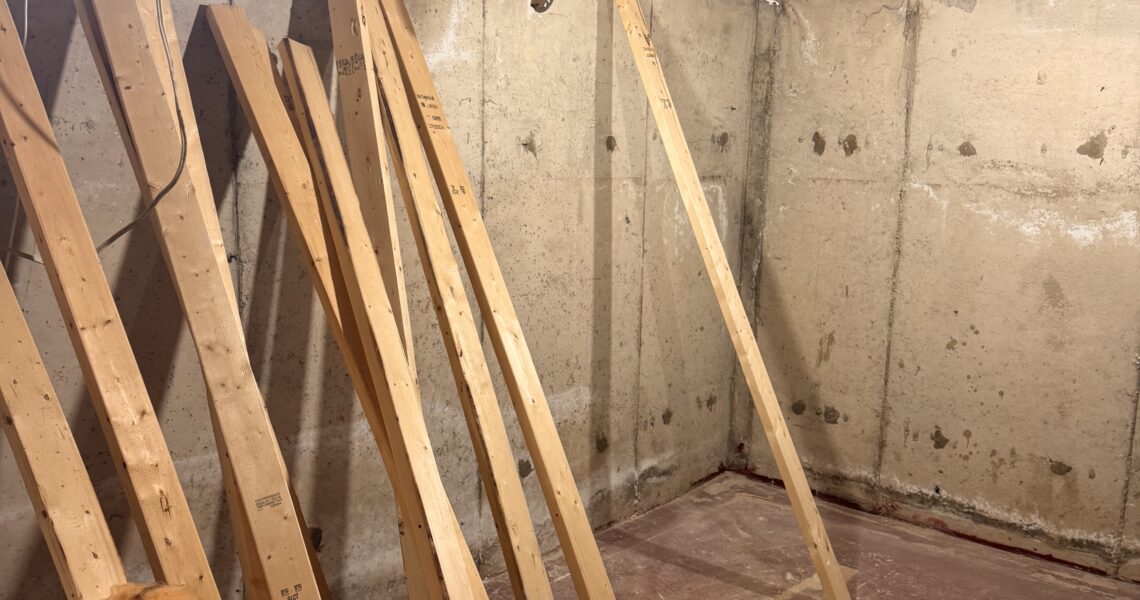
One of the most serious issues observed during basement renovations is new framing being installed before mold remediation is completed.
Fresh lumber is highly vulnerable because:
-
It is porous
-
It absorbs airborne spores easily
-
It often sits in humid basement environments
-
It becomes enclosed behind walls
Once new framing is installed in a contaminated space, mold spores settle onto the wood. Over time — especially if moisture returns — this can lead to:
-
Mold growth behind finished walls
-
Persistent musty odors
-
Health symptoms for occupants
-
Costly tear-outs and re-remediation
At that point, the renovation has essentially trapped mold inside the home.
HVAC, Ductwork, and Ceiling Cavities: The Silent Spreaders
Many GTA basements contain:
-
Furnace rooms
-
HRV or ERV systems
-
Return air pathways
-
Supply ductwork
During demolition, ceiling cavities and ductwork are often left open. Without negative air pressure and HEPA filtration:
-
Spores are drawn into HVAC systems
-
Contamination spreads throughout the home
-
Mold odors reappear even after renovations
This is why mold remediation must always occur before mechanical systems are sealed or finished.
Why Renovation Mold Comes Back Months Later
One of the most frustrating experiences for homeowners is when mold symptoms return months after a renovation is completed.
Common warning signs include:
-
Musty smells returning
-
Headaches, allergies, or respiratory irritation
-
Staining behind baseboards
-
Condensation on basement windows
-
Discoloration along wall bottoms
In most cases, the root cause is the same:
👉 Mold was never properly remediated before rebuilding.
What Proper Mold Remediation Actually Requires (IICRC S520)
Professional mold remediation follows strict guidelines established by the Institute of Inspection, Cleaning and Restoration Certification (IICRC).
A proper remediation process includes:
1. Professional Mold Inspection & Assessment
This includes:
-
Visual inspection
-
Moisture mapping
-
Identification of contamination pathways
-
Evaluation of renovation impact
2. Containment
Affected areas are sealed using:
-
Polyethylene barriers
-
Zipper doors
-
Controlled access points
This prevents mold spores from spreading during work.
3. Negative Air Pressure
HEPA-filtered air scrubbers create negative pressure, pulling contaminated air into filters instead of into the home.
4. HEPA Vacuuming
All exposed surfaces — including:
-
Concrete walls
-
Framing
-
Ceiling cavities
-
Mechanical surfaces
are HEPA vacuumed to remove settled spores.
5. Antimicrobial Treatment
Approved antimicrobial solutions are applied to neutralize remaining mold contamination at the source.
6. Clearance Before Rebuilding
Only after remediation is complete should:
-
New framing be installed
-
Insulation be added
-
Drywall be closed
This step is critical to preventing recurrence.
Basement Renovations in Toronto: When to Stop and Call a Mold Professional
If you are renovating a basement in Toronto or the GTA, pause work immediately if you notice:
-
Mold discovered during demolition
-
Dark staining on concrete or wood
-
Persistent musty odors
-
Previous water damage or flooding
-
Efflorescence or damp foundation walls
-
Condensation around basement windows
Continuing renovation without remediation often leads to double the cost later.
Health Risks of Ignoring Mold During Renovation
Mold exposure can impact:
-
Children
-
Seniors
-
Individuals with asthma or allergies
-
Anyone with compromised immune systems
Symptoms may include:
-
Chronic coughing or sneezing
-
Eye, nose, or throat irritation
-
Headaches and fatigue
-
Worsening asthma symptoms
Because renovated basements are often used as:
-
Bedrooms
-
Home offices
-
Rental units
the indoor air quality becomes especially important.
Why Mold Problems Are Common in GTA Basement Apartments
Basement apartments are increasingly popular across Toronto and surrounding cities. However, when mold is hidden behind new finishes:
-
Tenants experience symptoms
-
Landlords face complaints and liability
-
Units may fail inspections
-
Legal disputes can arise
Proper mold remediation before finishing is not just best practice — it is risk management.
The Cost of Doing It Wrong vs Doing It Right
|
Scenario |
Cost Impact |
|---|---|
|
Demolition only |
Lower upfront, high long-term risk |
|
Renovation without remediation |
Mold returns, tear-out required |
|
Proper remediation before rebuild |
One-time cost, long-term protection |
In almost every case, early remediation is less expensive than corrective remediation after walls are closed.
Protecting Your Renovation Investment in Toronto & the GTA
A basement renovation should increase:
-
Property value
-
Comfort
-
Usable space
It should not introduce hidden health risks or future repair costs.
The most successful renovation projects in Toronto and the GTA follow this order:
1️⃣ Inspect
2️⃣ Remediate mold (if present)
3️⃣ Control moisture
4️⃣ Renovate
Skipping steps leads to failure.
Final Thoughts: Mold Doesn’t Disappear When You Can’t See It
Mold does not care how new your drywall is.
It does not respect renovation timelines.
And it does not disappear when walls are closed.
If your basement renovation involves demolition — especially after water damage — mold assessment and remediation are essential steps, not optional ones.
Professional Mold Inspections & Remediation in Toronto & the GTA
Mold Assist provides professional, IICRC-certified mold inspections and remediation services across:
Toronto • Mississauga • Brampton • Vaughan • Markham • Richmond Hill • Oakville • Burlington • Milton • Ajax • Whitby • Pickering • and surrounding GTA communities.
If you’re renovating, rebuilding, or concerned about mold after demolition, contact Mold Assist before you close the walls.