
During a scheduled maintenance shutdown, Mold Assist completed commercial mold remediation in Cambridge after workers discovered mold and water damage inside concealed wall assemblies at a manufacturing facility. Our team carried out controlled demolition, HEPA cleaning and structural drying while protecting sensitive manufacturing equipment.
Commercial Mold Remediation Cambridge Project Overview
- Location: Cambridge, Ontario
- Property type: Commercial manufacturing facility
- Affected areas: Two adjoining work areas
- Mold impact: Approximately 100 square feet
- Water-damage impact: Approximately 200 square feet
- Remediation classification: EACC Level 3
- Project duration: Five working days
- Equipment used: Two commercial dehumidifiers and two HEPA air scrubbers
- Oversight: Independent environmental consultant
- Services provided: Containment, negative air pressure, equipment protection, controlled demolition, HEPA cleaning, disinfection, drying and project documentation
This commercial mold remediation Cambridge project demonstrates that successful remediation involves far more than removing visible mold. Manufacturing facilities require careful containment planning, equipment protection, environmental oversight and moisture control to help minimize operational disruption while safely addressing mold-affected building materials. The project also highlights the importance of identifying and correcting the underlying moisture source before replacement materials are installed.
How Mold Was Discovered at the Cambridge Facility
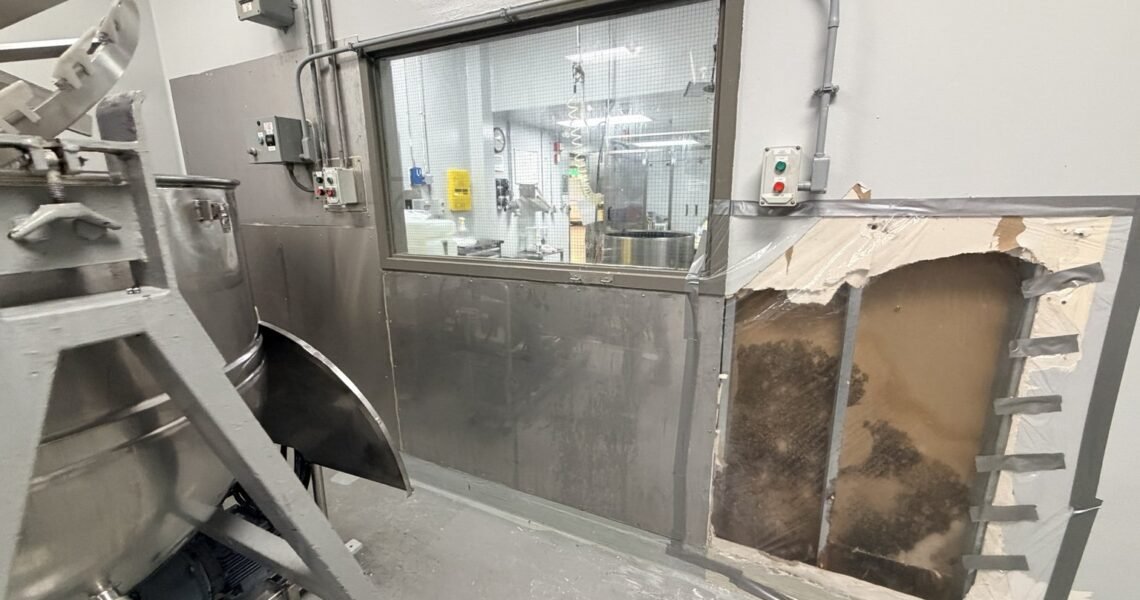
During the scheduled facility shutdown, maintenance workers discovered visible mold growth on the rear and lower portions of drywall inside a shared wall cavity between two adjoining work areas.
Next, an independent environmental consultant investigated the affected areas and developed the remediation scope.
The investigation identified:
- Confirmed mold growth on drywall
- Wet drywall and cement-board wall assemblies
- Suspected concealed mold behind stainless-steel wall panels
- Standing water inside a plumbing chase
- Wet and mold-affected paper materials
- Moisture damage extending beyond the initially opened wall cavity
- Approximately 100 square feet of mold growth
- Approximately 200 square feet of associated water damage
Laboratory examination of a drywall sample confirmed fungal growth. As a result, the consultant recommended removing affected materials using EACC Level 3 mold-remediation procedures.
The consultant also recommended further investigation of the moisture source. The building owner needed to correct the source before contractors could safely install replacement finishes. Health Canada similarly advises property owners to identify and correct moisture problems because mold can return when the underlying source remains unresolved. Learn more in the Health Canada guide to addressing moisture and mould indoors.
Why EACC Level 3 Mold Remediation Was Required
Commercial mold remediation inside a manufacturing facility requires careful planning and strict control of dust and airborne particles. The work must protect employees, equipment, unaffected areas and surrounding business operations.
The Environmental Abatement Council of Canada publishes a mould-abatement guideline designed to support safe work involving microbial abatement and remediation. The guidance addresses work practices, worker protection, training and appropriate remediation controls. You can review the EACC mould-abatement guidelines.
For this project, the remediation plan accounted for:
- Sensitive machinery and workplace equipment
- Separation of contaminated and unaffected areas
- Negative air pressure and HEPA filtration
- Worker decontamination procedures
- Controlled handling and disposal of contaminated materials
- Protection of surrounding operations
- Independent environmental oversight
- Completion within the facility’s maintenance-shutdown schedule
Mold Assist coordinated the remediation work with facility representatives and the independent environmental consultant. This coordination helped ensure that the team followed the approved scope while protecting adjacent operations.
Our Commercial Mold Remediation Process in Cambridge
The work followed a carefully planned sequence of containment, equipment protection, controlled removal, cleaning and drying. You can also learn more about Mold Assist’s mold removal and remediation process.
1. Site Preparation and Equipment Protection
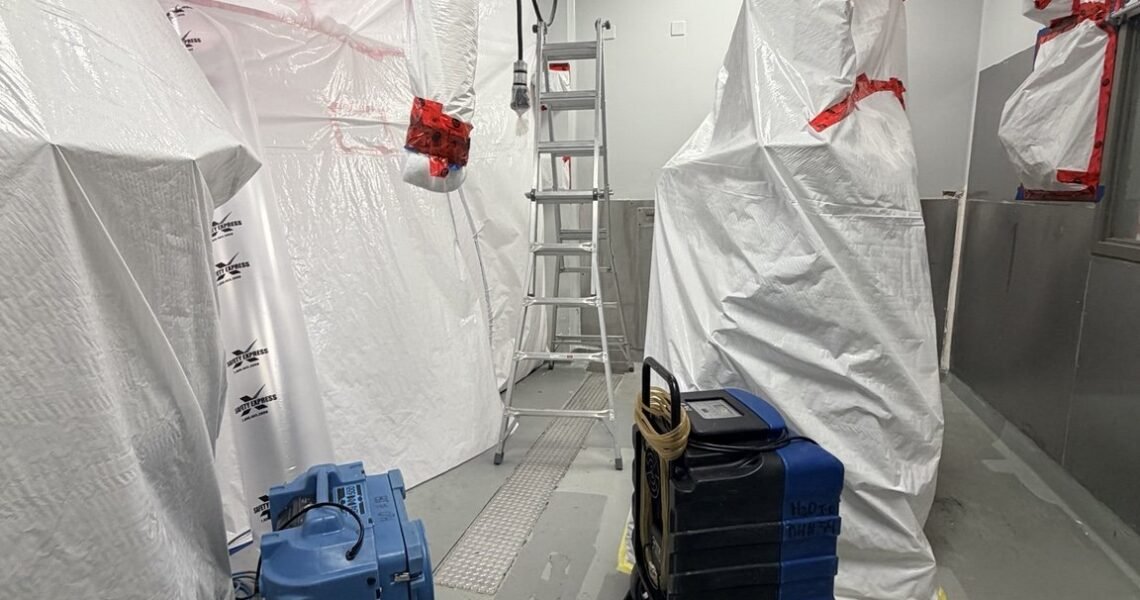
Before demolition began, Mold Assist protected machinery, desks, furniture and other equipment located within or near the affected work areas.
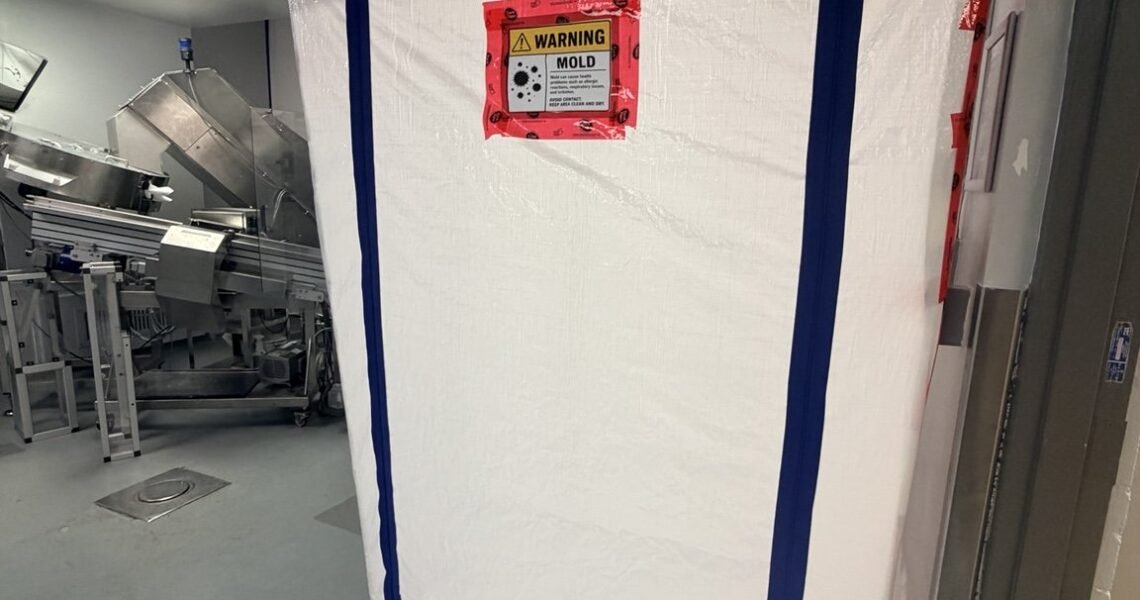
First, our technicians isolated the two remediation areas using polyethylene sheeting. They also installed controlled entrances with curtain flaps, placed floor protection and posted mold-hazard signage at the entrances.
In addition, the team established a worker decontamination facility that included:
- A clean change area
- A dirty change area
- A wash station
- Fresh water, soap and disposable towelling
Together, these controls helped prevent contaminated dust and debris from moving outside the work areas.
2. Negative Air Pressure and HEPA Filtration
Next, Mold Assist installed HEPA-filtered negative-air equipment to maintain inward airflow within the containment. Negative pressure helps reduce the risk of airborne particles escaping into adjacent areas during demolition and cleaning.
Before removal work began, the independent environmental consultant inspected the remediation setup. The review included:
- Work-area isolation
- Polyethylene containment
- Worker decontamination facilities
- Negative air pressure
- Personal protective equipment
- HEPA-filtered equipment
- Dust-suppression procedures
- Waste-handling procedures
Following the consultant’s review, Mold Assist proceeded with the approved remediation work.
3. Protection of Wall Openings and Facility Services
The manufacturing environment contained machinery, utility connections, vents, pipes and wall penetrations that required protection.
Therefore, our technicians covered and sealed nearby components before demolition. These controls helped prevent dust and debris from entering unaffected areas or sensitive systems.
4. Controlled Demolition
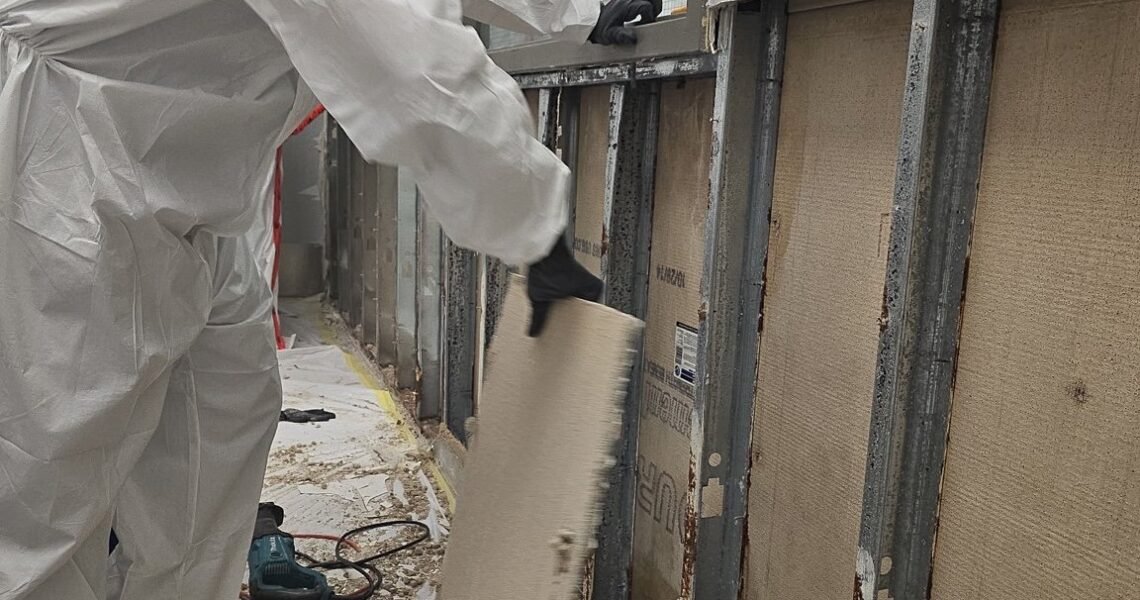
After completing site preparation, Mold Assist removed affected and suspected water-damaged building materials under controlled conditions.
The demolition work included:
- Removal of mold-affected drywall
- Removal of wet cement-board materials
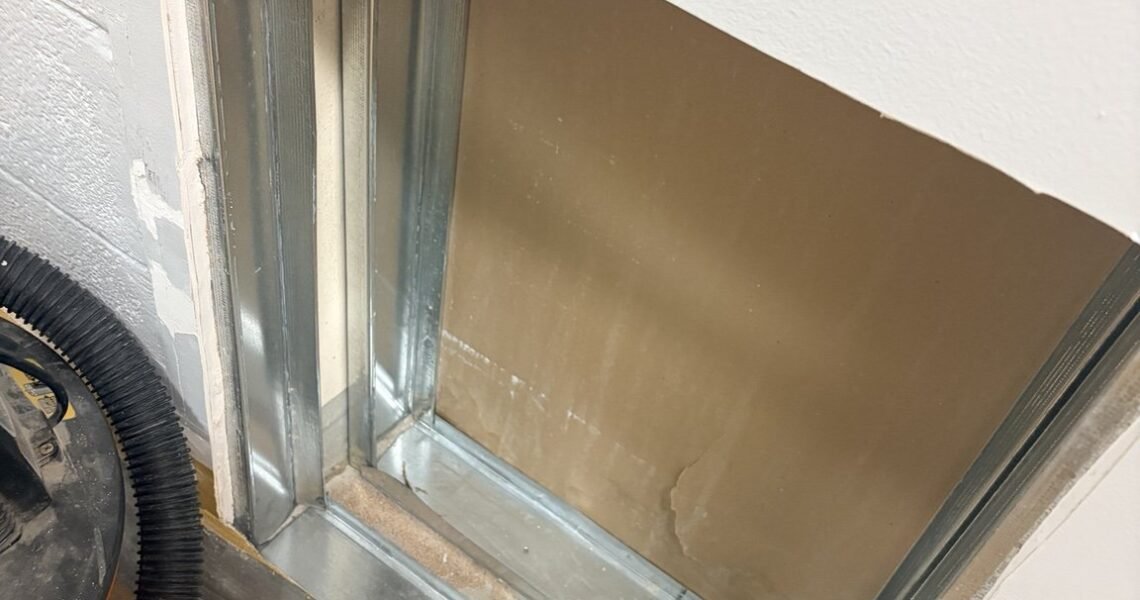
- Removal of suspected contaminated materials inside concealed cavities
- Removal beyond visible mold growth where required by the consultant’s scope
- Removal of wall panels attached to affected assemblies
- Removal of metal framing where necessary to provide remediation access
- Opening concealed sections behind wall finishes
- Removal of wet and mold-affected debris
During demolition, our team sealed waste inside the contaminated work area. Technicians cleaned the exterior surfaces of the waste bags before double-bagging the materials and moving them through the designated waste-removal route.
5. Worker Protection During Commercial Mold Remediation
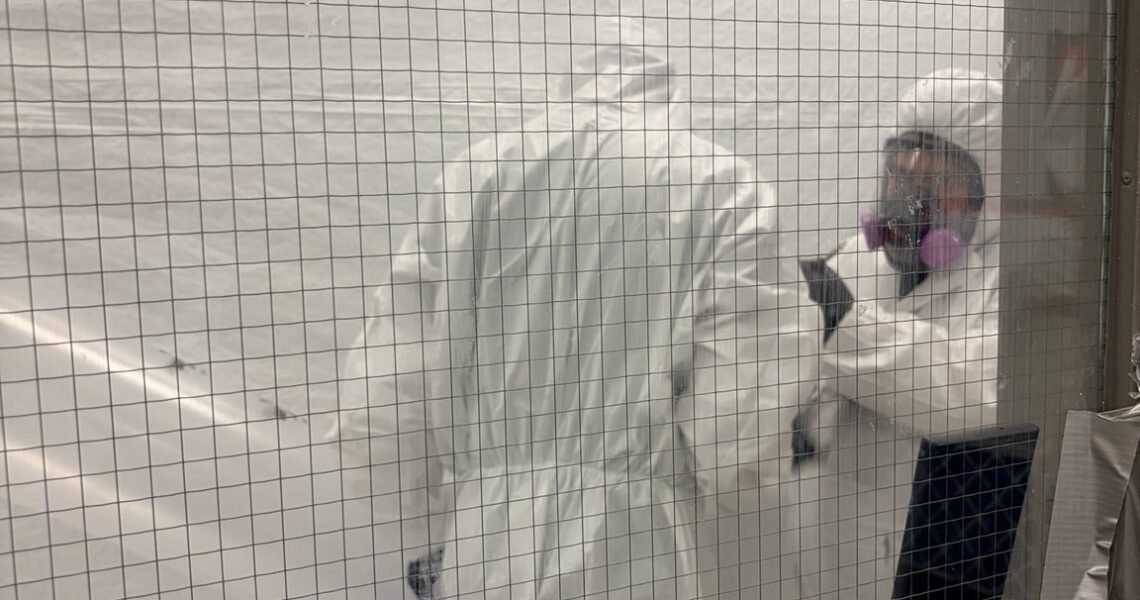
Mold Assist technicians wore respiratory protection, disposable protective coveralls, gloves and protective footwear while working inside the containment.
This personal protective equipment helped protect workers while they removed affected building materials and cleaned concealed surfaces.
6. HEPA Cleaning, Disinfection and Surface Treatment
Following demolition, Mold Assist completed detailed cleaning of the exposed wall cavities, metal framing and surrounding surfaces.
Mold Assist’s remediation process included:
- HEPA vacuuming of exposed surfaces
- Cleaning of metal framing and wall cavities
- Wet wiping with a professional disinfecting product
- Cleaning of protected equipment and surrounding surfaces
- Removal of remaining dust and demolition debris
- Application of a protective coating where required
- Continued HEPA-filtered air scrubbing
- Final cleaning before containment removal
Meanwhile, our technicians repositioned equipment as the work progressed. This approach helped maintain airflow and drying in the areas that required treatment.
7. Structural Drying and Moisture Control
Mold Assist installed two commercial dehumidifiers and two HEPA air scrubbers to support structural drying and air filtration.
The team also created drying chambers within the affected areas and repositioned the equipment as the project progressed. Throughout the work, technicians monitored environmental conditions and moisture levels.
Structural drying is an important part of mold remediation. Contractors should not install replacement materials until the property owner corrects the moisture source and confirms that the remaining assemblies are suitably dry.
8. Final Cleaning and Containment Removal
Before removing containment, Mold Assist:
- HEPA vacuumed the affected areas
- Completed detailed surface cleaning
- Applied disinfecting products where required
- Inspected the areas for remaining debris
- Prepared the work areas for independent environmental review
Finally, the team carefully dismantled the containment barriers, removed the remediation equipment and prepared the work areas for the consultant’s post-remediation assessment.
Independent Environmental Sampling
Following the remediation work, the independent environmental consultant completed air sampling in the remediated work areas, the adjacent corridor and outdoors.
The laboratory reported:
- 2,300 total fungal spores per cubic metre in the remediated work areas
- 520 total fungal spores per cubic metre in the adjacent corridor
- 12,000 total fungal spores per cubic metre in the outdoor reference sample
At the time of sampling, the total airborne fungal-spore concentrations in the remediated work areas and adjacent corridor were below the outdoor reference concentration.
These results apply only to the sampled locations and the environmental conditions present when the consultant collected the samples. The independent environmental consultant remained responsible for interpreting the results and determining final acceptance.
Property owners who suspect concealed mold can begin with a professional assessment. Learn more about our mold inspection services, including visual assessment and the investigation of hidden moisture conditions.
Commercial Mold Remediation Cambridge Project Outcome
Mold Assist completed the commercial mold-remediation project over five working days during the facility’s scheduled maintenance shutdown.
The completed work included:
- Protection of sensitive commercial equipment
- Isolation of two affected work areas
- EACC Level 3 containment procedures
- Negative air pressure and HEPA filtration
- Worker decontamination facilities
- Controlled demolition of affected wall assemblies
- Cleaning and disinfection of exposed cavities and framing
- Commercial dehumidification and air scrubbing
- Controlled waste handling and disposal
- Daily photographic documentation
- Coordination with an independent environmental consultant
- Independent post-remediation air sampling
This Cambridge project demonstrates why commercial mold remediation requires more than removing visible damage. Effective remediation combines professional assessment, containment, equipment protection, controlled demolition, detailed cleaning, air filtration, moisture management and independent oversight.
Why This Commercial Mold Remediation Project Matters
Every commercial mold problem presents different conditions. In this Cambridge manufacturing facility, the affected materials were located behind wall finishes and beside sensitive equipment, utilities and active work areas.
As a result, the project required controlled access, equipment protection, negative air pressure, detailed demolition planning, structural drying and ongoing coordination with an environmental consultant.
The project also demonstrates the importance of investigating concealed wall assemblies instead of addressing only visible surface damage. Without proper access, cleaning and moisture correction, hidden contamination or wet materials may remain behind finished surfaces.
Commercial Mold Remediation in Cambridge and Southern Ontario
Mold Assist provides professional mold remediation services for residential and commercial properties in Cambridge and throughout Southern Ontario.
Our team works with commercial property owners, facility managers, environmental consultants, insurance representatives and property-management teams.
You can also review the complete Mold Assist service-area directory for communities served across Ontario.
Our commercial mold services include:
- Emergency mold inspections
- Environmental-consultant-directed remediation
- EACC Level 2 and Level 3 mold remediation
- Commercial containment systems
- Negative air pressure and HEPA filtration
- Controlled demolition
- Equipment and machinery protection
- HEPA cleaning and disinfection
- Structural drying and moisture monitoring
- Photographic project documentation
- Coordination with consultants, facility managers and property-management teams
Frequently Asked Questions
What is EACC Level 3 mold remediation?
EACC Level 3 procedures are generally used for larger or higher-risk mold-remediation projects. Depending on the approved scope, the procedures may include full containment, negative air pressure, worker decontamination facilities, respiratory protection, controlled waste handling and detailed HEPA cleaning.
Can commercial mold remediation be completed during a manufacturing shutdown?
Yes. A scheduled shutdown can provide an opportunity to isolate affected areas, protect equipment and complete disruptive remediation work while reducing interference with normal operations.
Can Mold Assist follow an environmental consultant’s remediation scope?
Yes. Mold Assist can complete remediation based on a scope developed by an independent environmental consultant or occupational hygienist. Mold Assist can also coordinate required site reviews and post-remediation sampling.
How is manufacturing equipment protected during mold remediation?
Depending on the facility and equipment, technicians may cover and seal machinery with polyethylene sheeting, isolate it from demolition activities and clean surrounding surfaces before removing the protection.
Why is negative air pressure used during mold remediation?
Negative air pressure helps direct airflow into the contained work area. This controlled airflow reduces the risk of dust and airborne particles moving into adjacent spaces during demolition and cleaning.
Why must the moisture source be corrected before rebuilding?
New materials should not be installed over damp assemblies or before the underlying moisture problem has been corrected. Otherwise, moisture damage and mold growth may return.
How long does commercial mold remediation take?
The duration depends on the affected area, access, containment requirements, concealed contamination, consultant reviews and drying conditions. Mold Assist completed this Cambridge manufacturing-facility project over five working days.
Does Mold Assist provide commercial mold remediation outside Cambridge?
Yes. Mold Assist provides commercial and industrial mold-remediation services throughout Cambridge, Kitchener-Waterloo, Guelph, Hamilton, Toronto and surrounding Southern Ontario communities.
Need Commercial Mold Remediation in Cambridge?
If mold or water damage is discovered during maintenance, renovation or a scheduled facility shutdown, contact Mold Assist for professional commercial mold-remediation support in Cambridge or elsewhere in Southern Ontario.
Our team can coordinate containment, equipment protection, controlled demolition, HEPA cleaning, structural drying and consultant-directed remediation while helping minimize disruption to your operations.