
Infrared Thermal Imaging for Mold Inspections in Toronto & the GTA
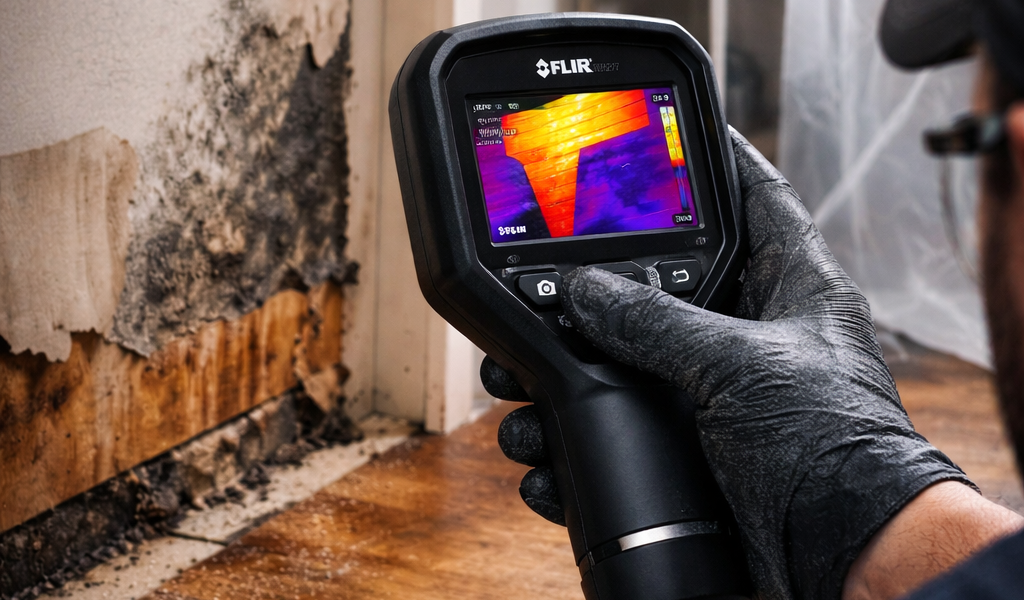
Mold problems in Toronto and the Greater Toronto Area are often caused by hidden moisture, not just visible surface growth. Condensation, roof leaks, plumbing failures, foundation seepage, and poor ventilation can all create moisture pockets behind walls, ceilings, flooring, and insulation—areas that are hard to assess with a basic visual check.
At Mold Assist, we use infrared thermal imaging (FLIR) as part of our professional mold inspection services across Toronto, Peel, York, Durham, and Halton. This technology helps us locate moisture intrusion accurately, identify mold-prone conditions, and build a targeted remediation plan—without unnecessary demolition.
What Is Infrared Thermal Imaging in Mold Inspections?
Infrared thermal imaging uses specialized cameras (commonly referred to as FLIR thermal cameras) to detect temperature differences across building materials. These temperature variations often indicate the presence of moisture, leaks, condensation, or insulation problems that can feed mold growth.
Because damp materials can cool differently than dry materials, thermal imaging helps us “see” problem zones early—often before mold becomes visible.
Important note: Infrared imaging is a powerful diagnostic tool, but it’s best used alongside moisture meters, humidity readings, and (when needed) sampling—so your inspection is accurate and defensible.
Why Mold Inspections in the GTA Need Advanced Moisture Detection
Toronto-area buildings face conditions that increase the risk of hidden mold:
- Seasonal humidity and winter condensation
- Freeze–thaw cycles affecting foundations and masonry
- Aging plumbing in older Toronto homes
- Basement seepage and elevated groundwater
- Poor ventilation in bathrooms, laundry rooms, and cold rooms
- Window and door condensation during cold months
This is why Mold Assist focuses on finding the moisture source—not just cleaning what’s visible. If moisture isn’t corrected, mold can return.
If your concern started after a leak or flooding, you may also benefit from our water damage assessment and drying guidance (ask our team about moisture mapping and drying verification).
Benefits of Infrared Thermal Imaging for Mold Remediation
Using thermal imaging during inspections and remediation provides clear advantages for homeowners, landlords, and property managers:
1) Detects Hidden Moisture
Infrared helps locate damp areas behind walls, ceilings, flooring, and around window frames—common hidden sources that can feed mold growth.
2) Improves Inspection Accuracy
Thermal imaging reduces guesswork by confirming suspect areas before work begins, helping create a more precise scope.
3) Reduces Unnecessary Demolition
When we can pinpoint the moisture pathway, we can often limit tear-outs and focus only on materials that are truly impacted.
4) Supports Proper Containment Planning
Accurate mapping of affected zones helps us design safe containments and protect clean areas during mold remediation.
5) Confirms Drying After Remediation
After cleanup, thermal imaging can assist with verifying that drying is complete—especially in basements and behind finishes where moisture likes to linger.
How Mold Assist Uses Infrared Imaging During Mold Services
Our process is designed to support safe, effective remediation and long-term prevention:
- Inspection & moisture mapping: Visual assessment + infrared thermal imaging + moisture readings
- Identify the moisture source: Leak tracing, condensation zones, ventilation issues, and building envelope concerns
- Define the scope of work: Targeted plan aligned with industry best practices (containment, HEPA filtration, safe removal)
- Remediation & cleaning: Controlled removal of impacted materials and detailed cleaning (as required)
- Post-remediation verification: Re-check moisture conditions and confirm the environment is trending dry and stable
If your issue is primarily in a below-grade space, you may also want to review our basement mold removal options and prevention recommendations.
Infrared Imaging for Homes, Condos, and Commercial Spaces
Mold Assist uses infrared-assisted inspections for a wide range of properties across Toronto and the GTA, including:
- Houses, townhomes, and condominiums
- Basements, crawlspaces, and cold rooms
- Rental properties and multi-unit buildings
- Offices and commercial units
- Medical and childcare settings (where indoor air quality is critical)
Whether you’re dealing with visible mold, musty odours, window condensation, or recurring humidity issues, a professional inspection using infrared technology can help uncover the root cause.
Book a Professional Mold Inspection in Toronto & the GTA
If you suspect mold or hidden moisture, early detection can reduce damage and protect indoor air quality.
Mold Assist serves Toronto and surrounding areas including Mississauga, Brampton, Vaughan, Markham, Richmond Hill, Oakville, Burlington, Ajax, Pickering, Whitby, and nearby GTA communities.
Next step:
Contact Mold Assist to book an inspection and get a clear plan forward.
FAQs: Infrared (FLIR) Mold Inspections in Toronto & the GTA
Can a FLIR camera detect mold?
Infrared cameras don’t detect mold directly. They detect temperature differences that often indicate moisture, condensation, or insulation issues—conditions that can lead to mold. Mold growth is confirmed through inspection findings and, when needed, sampling or lab analysis.
Is thermal imaging accurate for finding moisture?
Thermal imaging is highly effective for locating suspect moisture patterns, especially when paired with a moisture meter and humidity readings. It helps narrow down where the moisture is, so remediation can be targeted.
Do you have to open walls to find hidden moisture?
Not always. Infrared imaging can often identify where moisture is likely present behind surfaces. If verification is needed, a technician may recommend a small access point (minimized and strategic) rather than broad demolition.
When should I book a mold inspection?
Book an inspection if you notice musty odours, visible spotting, recurring window condensation, allergy-like symptoms indoors, or after a leak, flood, or humidity problem—especially in basements and bathrooms.
Is infrared thermal imaging useful after mold remediation?
Yes. Post-remediation, thermal imaging can help confirm that materials and cavities are trending dry and stable, supporting a more confident close-out—especially after drying equipment has been used.
What causes mold in Toronto homes most often?
Common causes include window condensation, bathroom humidity, basement seepage, plumbing leaks, roof/attic moisture issues, and poor ventilation. Correcting the moisture source is essential to prevent recurrence.
Do you provide mold remediation after the inspection?
Yes. Mold Assist can perform both mold inspection and mold remediation, including containment, HEPA filtration, safe removal, cleaning, and guidance on moisture correction.
Is thermal imaging included in your inspection?
It’s commonly used when the situation suggests hidden moisture (behind walls/ceilings, around windows, in basements, or after a leak). Your technician will advise what’s appropriate for the specific conditions on-site.