
Benefits of an HRV System and How It Helps Prevent Attic Mold
Attic mold is one of the most common and costly hidden problems in Canadian homes. While many homeowners focus on insulation upgrades or roof repairs, the real issue is often poor indoor air quality and uncontrolled humidity. A properly designed and balanced HRV (Heat Recovery Ventilator) system plays a critical role in preventing attic mold by managing moisture, airflow, and air pressure throughout the home.
In this guide, we explain how HRV systems work, the advantages of installing one, and why HRVs are one of the most effective tools for achieving a mold-free attic.
What Is an HRV System?
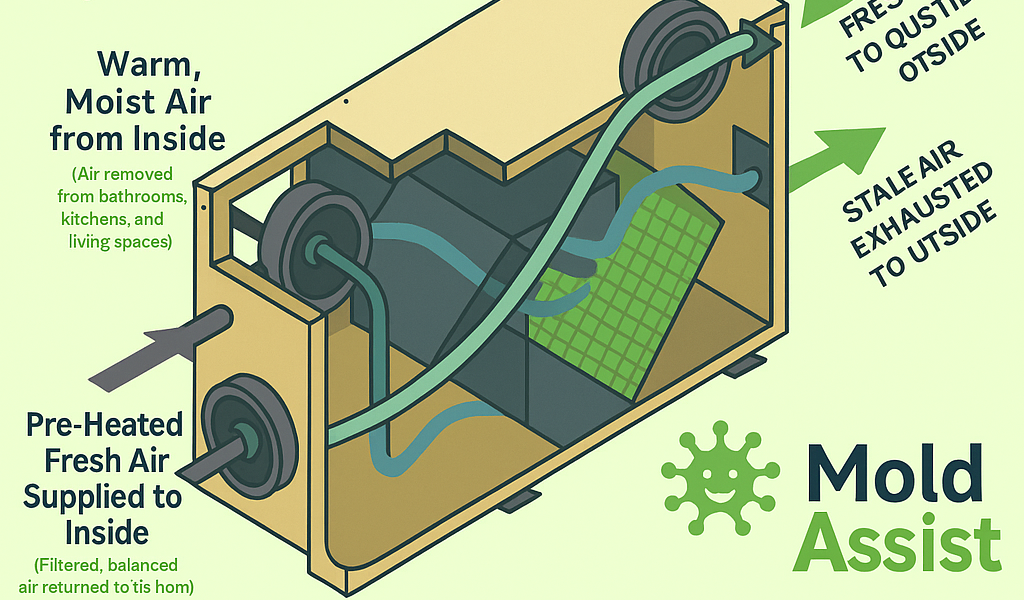
An HRV (Heat Recovery Ventilator) is a mechanical ventilation system that continuously replaces stale indoor air with fresh outdoor air while recovering heat from the outgoing air. This allows homes to stay ventilated without sacrificing energy efficiency.
According to Health Canada, proper ventilation is essential for maintaining healthy indoor air quality and controlling excess moisture — both of which are directly tied to mold growth.
Modern homes are built airtight to conserve energy. Without an HRV, moisture produced inside the home becomes trapped, leading to condensation, air pressure imbalances, and eventually mold — especially in attic spaces.
Why Attic Mold Is So Common in Canadian Homes
Attic mold does not occur randomly. It is almost always the result of warm, moist indoor air escaping into a cold attic environment.
Common causes include:
- High indoor humidity from showers, cooking, and laundry
- Air leakage through ceiling penetrations and attic hatches
- Poor or inconsistent ventilation
- Unbalanced air pressure inside the home
- Cold roof sheathing during winter months
When moisture-laden air reaches the attic and contacts cold surfaces, condensation forms. Over time, this leads to mold growth on roof decking, trusses, and insulation.
How an HRV System Prevents Attic Mold
1. Reduces Indoor Humidity at the Source
The primary advantage of an HRV system is its ability to continuously remove excess moisture from inside the home before it migrates upward into the attic.
HRVs extract humid air from high-moisture areas such as bathrooms, kitchens, and laundry rooms while supplying fresh air to living spaces. This keeps indoor humidity within a safe range and prevents condensation buildup.
Health Canada recommends maintaining indoor humidity between 30–50% to reduce mold risk, especially during winter.
2. Controls Air Pressure and Prevents Moisture Migration
Many homes without proper ventilation become positively pressurized, meaning indoor air is forced upward into the attic through gaps and penetrations.
A properly balanced HRV:
- Maintains neutral air pressure
- Prevents warm air from being pushed into the attic
- Reduces moisture transport through the ceiling
This pressure control is one of the most overlooked but critical factors in preventing attic mold.
3. Provides Continuous, Consistent Ventilation
Unlike bathroom fans that rely on manual operation, HRV systems run continuously or on scheduled cycles. This ensures constant air exchange and eliminates humidity spikes.
Consistent ventilation means:
- Lower average indoor humidity
- Fewer condensation events
- Improved performance of attic ventilation systems
According to the National Research Council of Canada, mechanical ventilation is essential in modern airtight homes to prevent moisture-related building damage.
4. Enhances Attic Ventilation Performance
Attic ventilation systems such as soffit vents, roof vents, and ridge vents rely on dry indoor air to function properly.
An HRV supports attic ventilation by:
- Reducing the moisture load entering the attic
- Lowering condensation risk on roof sheathing
- Improving airflow balance throughout the structure
Without an HRV, even a well-designed attic ventilation system may struggle to manage moisture effectively.
5. Improves Indoor Air Quality While Preventing Mold
Beyond mold prevention, HRVs significantly improve indoor air quality by removing:
- Odors
- Volatile organic compounds (VOCs)
- Airborne pollutants
- Excess moisture
Cleaner, drier air means a healthier living environment and a lower likelihood of mold developing anywhere in the home.
HRV vs. Exhaust Fans: Why HRVs Are Superior
Many homes rely solely on bathroom and kitchen exhaust fans. While helpful, these systems are limited.
Exhaust fans:
- Operate intermittently
- Do not balance air pressure
- Can increase negative pressure if overused
An HRV provides balanced ventilation, ensuring equal air supply and exhaust — a critical factor in preventing moisture from being pushed into attic spaces.
Why HRV Installation and Balancing Are Critical
An HRV system is only effective when it is:
- Properly sized for the home
- Installed according to building code
- Professionally balanced
An improperly installed or unbalanced HRV can actually worsen moisture problems by creating pressure imbalances.
Professional assessment ensures the system supports attic mold prevention rather than contributing to future issues.
HRV and Mold Remediation: Prevention Is Key
Mold removal treats the visible problem — not the cause. Without addressing ventilation and humidity control, attic mold frequently returns.
Installing or correcting an HRV system:
- Addresses the root cause of attic mold
- Reduces the chance of recurrence
- Protects insulation and roof structures
- Reduces long-term remediation costs
This is why ventilation upgrades are often recommended alongside professional mold remediation.
Final Thoughts: HRVs Are Essential for a Mold-Free Attic
An HRV system is not just an energy-efficiency upgrade — it is a critical mold prevention tool. By controlling humidity, balancing air pressure, and providing consistent ventilation, HRVs help keep attics dry, roofs protected, and homes healthy.
If you are experiencing attic mold, frost buildup, or recurring condensation, evaluating your HRV system should be one of the first steps toward a permanent solution.